

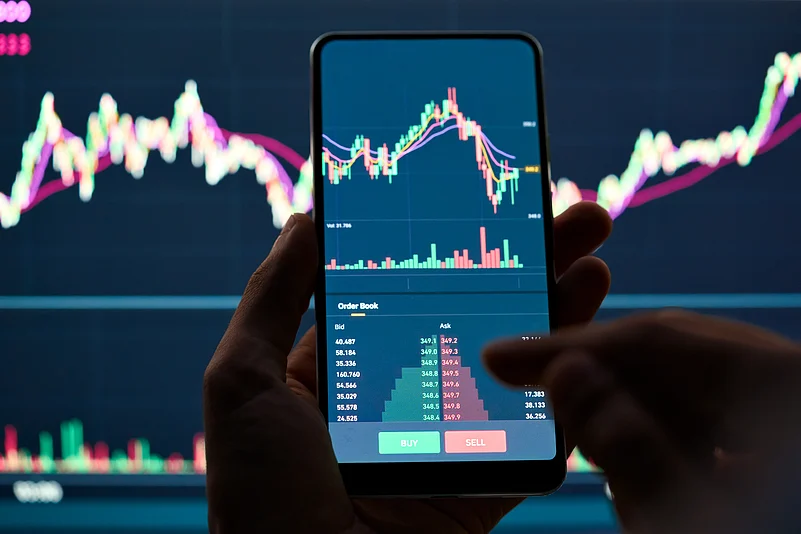
A generation ago, entering the Indian stock market meant physical share certificates, long queues at broker offices, and a process so cumbersome that ordinary middle-class families simply stayed away — today, that same journey begins with a smartphone and a few minutes of digital verification, yet the sheer variety of choices available means that understanding what a demat account truly does for you, and how to evaluate trading apps beyond their marketing promises, remains just as important as ever for anyone serious about building real wealth through Indian equities.
The Shift That Opened the Market to Everyone
India’s equity market was not always accessible to the average person. For decades, investing was the domain of those with connections to established broking firms, residents of major financial cities, or individuals fortunate enough to have family members who understood the system. The dematerialisation of securities and the subsequent evolution of digital broking infrastructure dismantled these barriers one by one, until today the market is genuinely within reach of anyone with a valid identity document, a bank account, and a mobile phone.
This democratisation of access is one of the most significant financial developments in India’s recent history. The number of registered demat accounts in India crossed extraordinary milestones in recent years, with millions of new investors entering the market each year — many of them young, first-generation investors from smaller cities and towns who would never have participated under the old system. The infrastructure built to serve them has, in turn, become more competitive, more capable, and more affordable than anyone could have anticipated even a decade ago.
What Happens When You Own a Share Without Knowing It
Here is something that surprises many new investors: when you buy a share of any company listed on the National Stock Exchange or the Bombay Stock Exchange, you do not receive anything physical. No document arrives. No certificate is posted to your address. The evidence of your ownership exists entirely as an electronic record — a digital entry in a centralised depository system that is updated the moment your transaction settles.
This is not a limitation of the modern system. It is its greatest strength. Electronic records cannot be lost in a house fire. They cannot be misplaced during a property move. They cannot be forged by unscrupulous intermediaries. They transfer instantaneously when sold, settle reliably within the prescribed timeframe, and are accessible from anywhere in the country through the platform linked to your account. The shift from physical to electronic ownership transformed Indian securities markets from a system plagued by fraud, delay, and inefficiency into one of the most technically robust equity market infrastructures in Asia.
The Three-Account Structure Explained Simply
When a new investor in India opens a broking relationship, they are actually establishing three interconnected accounts simultaneously, even if the paperwork feels like a single process. Understanding what each account does independently clarifies why all three are necessary and how they work together.
The demat account is the vault. It holds securities in electronic form — shares, bonds, exchange-traded funds, sovereign gold bonds, and other instruments — after they are purchased and delivers them when they are sold. Think of it as a digital locker maintained within the national depository infrastructure, assigned a unique identification number that travels with every transaction.
The trading account is the transaction engine. It is the account through which buy and sell orders are placed on the exchange. When you tap a button on your brokerage app to purchase shares, the instruction flows through your trading account to the exchange, where it is matched with a corresponding sell order. Without this account, you cannot access the exchange at all.
The savings bank account is the financial backbone. It is the source of funds when you buy and the destination when you sell. Modern broking platforms link your bank account directly through a payment gateway, enabling near-instant fund transfers so that capital is available for trading without unnecessary delays. Some platforms have built their own payment bank infrastructure to further reduce friction in this process.
How to Evaluate a Broking Platform Without Being Distracted by Advertising
The Indian broking industry has become intensely competitive, and marketing budgets are large. New investors are bombarded with offers of zero brokerage, free account opening, referral bonuses, and feature lists that read more like technology product launches than financial service descriptions. Cutting through this noise to identify which platform genuinely serves your interests requires a deliberate evaluative framework rather than a response to whichever advertisement you saw most recently.
Start with the cost structure. Brokerage charges vary significantly between full-service and discount brokers, and the right answer depends on how frequently you intend to trade and what kind of support you expect. A long-term investor who places a handful of orders each month can comfortably use a discount platform and direct the brokerage savings into additional investments. An active trader who places dozens of orders daily needs to calculate the per-trade economics carefully, as small differences in brokerage rates compound significantly at high frequencies.
Next, assess platform reliability through independent sources rather than the broker’s own claims. Seek out communities of Indian investors on financial forums and social media platforms where actual users discuss their real experiences with order execution during volatile sessions, customer support responsiveness during technical issues, and accuracy of corporate action processing. These first-hand accounts reveal far more about a platform’s true quality than any curated testimonial.
The Features That Actually Matter for New Investors
New investors are often overwhelmed by the feature density of modern broking platforms and spend time learning tools they will not use for years. It is more useful to identify the small set of features that genuinely matter for the early stages of an investment journey and ensure those work flawlessly before exploring the rest.
A clean, organised portfolio dashboard that clearly shows current holdings, purchase prices, current values, and profit or loss in both absolute and percentage terms is the single most used feature for most investors. It should update in real time during market hours and be immediately readable without requiring complex navigation.
A straightforward order placement interface that makes it impossible to accidentally place a market order when you intended a limit order — or to confuse a buy instruction with a sell — is equally critical. Errors in order placement are far more common on cluttered, unintuitive interfaces, and in a market that moves quickly, these errors carry real financial consequences.
Corporate action tracking — automatic crediting of dividends, bonus shares, rights issue entitlements, and stock split adjustments — should happen accurately and without manual intervention. For a long-term investor whose returns depend partly on compounding these periodic benefits, errors or delays in corporate action processing directly impact portfolio value.
Security Is Not Optional — It Is the Starting Point
The move to digital investing has created conveniences that were unimaginable in the era of physical certificates, but it has also created vulnerabilities that demand serious attention. Every investor managing financial assets through a mobile platform is responsible for securing that access at a level commensurate with what is at stake.
Two-factor authentication, biometric login, and independent verification for fund withdrawals are the three security layers that should be verified as active on any platform before significant capital is committed to it. Sebi mandates that brokers send real-time alerts to registered mobile numbers and email addresses for all account activities, including securities debits and fund transfers. Investors should confirm these alerts are arriving reliably and treat any unexpected notification as a reason to contact their broker immediately.
The regulatory framework protecting Indian investors is genuinely strong — client securities are required to be held separately from broker assets, ensuring that holdings are protected even if a broking firm encounters financial difficulties. Understanding this protection gives investors the confidence to participate fully in the market rather than holding back out of unnecessary concern about systemic risk.
The Best Time to Start Was Yesterday — The Second Best Time Is Now
India’s equity market has a long and well-documented history of rewarding investors who participate consistently, invest within their understanding, and allow time to do the work of compounding. The infrastructure available today removes every technical barrier that previously stood between an ordinary Indian and meaningful market participation. What remains is simply the decision to begin — thoughtfully, with the right foundation, and with a clear understanding of the tools that will support the journey ahead.